
Most people have at least one scar, and learning to accept them is part of life. Some treatments can help make scars less noticeable for those who want to reduce their appearance. In Tampa, Florida, various scar removal management techniques are available, ranging from surgical interventions to non-surgical treatments.
Scar Removal Management Techniques – The Key Takeaways
- When the skin gets damaged, it often leaves a scar behind. These marks can come from accidents, surgery, or skin problems. Many people feel self-conscious about their scars, and this can affect how they feel about themselves.
- Scars are a normal part of the healing process, but they can make some people feel less confident in daily life. The way a scar looks depends on how deep the injury was and how well it healed. While some scars fade over time, others stay visible for many years.
- The Scar Treatment Market is expected to grow at 4.48% from 2025 to 2032, according to Coherent Market Insights. The global market for scar treatment products is experiencing notable expansion driven by rising numbers of surgical operations and cases involving burns and physical injuries around the world. Topical products like gels and creams represent the largest portion of the market because they are easy to use and have received broad regulatory approval.
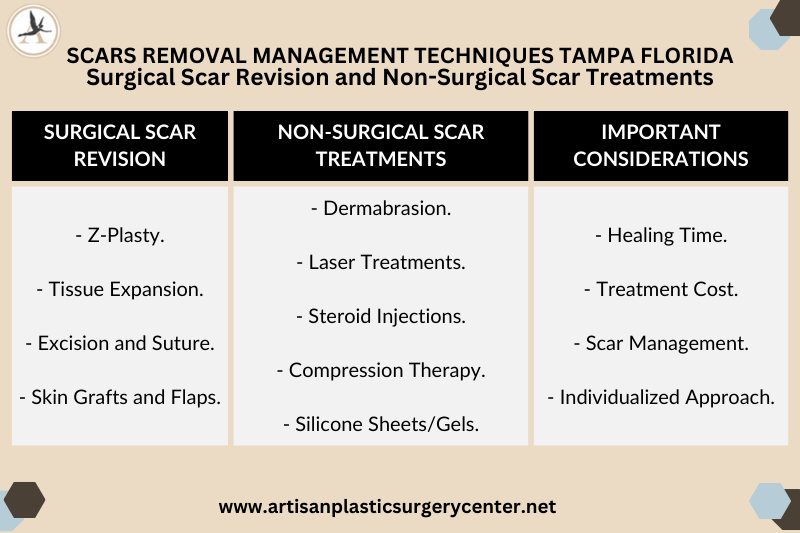
Scar Removal Management Techniques – Surgical Scar Revision
Surgical scar revision is often considered for more severe or prominent scars. The following techniques are commonly employed:
1. Excision and Suture
Excision involves surgically removing the scar tissue and closing the wound with sutures. This method is particularly effective for raised or wide scars. The surgeon aims to create a new, less noticeable scar by carefully aligning the skin’s natural lines and contours. Post-operative care is crucial for optimal healing and minimizing the appearance of the new scar.
2. Skin Grafts and Flaps
Skin grafts involve taking skin from another part of the body and transplanting it to the scarred area. Flaps involve moving skin with its blood vessels to cover a scar. The results depend on the surgeon’s skill and the patient’s ability to heal. This method differs from other options in that it maintains blood flow to the skin throughout the process. These techniques are beneficial for larger scars or those in areas where skin elasticity is limited.
3. Z-Plasty
Z-plasty is a surgical technique that reorients the scar by creating a Z-shaped incision. This method not only helps to lengthen the scar but also allows for better alignment with the skin’s natural lines, making it less noticeable. Z-plasty helps fix tight scars that limit how you can move, and it works well because it makes the scar longer and less tight. Surgeons use it often to help patients move better after getting bad scars. The technique gets its name because the cuts look like the letter Z. It’s a smart way to fix problem scars that pull on the skin.
4. Tissue Expansion
Tissue expansion involves inserting a balloon-like device under the skin near the scar. Over time, the device is gradually inflated to stretch the skin, creating additional tissue that can be used to cover the scar. This technique is advantageous for large scars and can result in a more natural appearance.
Scar Removal Management Techniques – Non-Surgical Scar Treatments
For individuals seeking less invasive options, several non-surgical treatments can effectively manage and reduce the appearance of scars.
1. Dermabrasion
Skin resurfacing with dermabrasion smooths out the skin surface by scraping away damaged cells. This helps improve the look of scars and wrinkles. Surgeons often use it to treat facial skin problems. The process works like sandpaper on wood, but is safe for skin when done by experts. After treatment, new skin grows back smoother and fresher looking. By removing the outer layers of skin, this technique can help to smooth out raised scars and improve overall skin texture. Multiple sessions may be required for optimal results.
2. Steroid Injections
Steroid injections can be used to flatten raised scars, particularly hypertrophic or keloid scars. The injections help make scars look better by stopping swelling and limiting the growth of tough fibers in the damaged skin. This makes the scar softer and less noticeable over time. This treatment is often combined with other modalities for enhanced effectiveness.
4. Silicone Sheets/Gels
Silicone sheets and/or gels come in two main forms. Flat sheets that stick to the skin and soft gels that you can spread on the affected area. Both types work well to make scars look better and feel smoother over time. Many people choose these treatments because they are easy to use at home and don’t require special medical visits. They create a protective barrier over the scar, helping to hydrate the tissue and reduce its appearance. Consistent use over several weeks or months can lead to significant improvements.
5. Compression Therapy
Compression therapy helps heal scars by using tight clothing or wraps on the affected skin. These special items squeeze the scar to make it flatter and less noticeable over time. Surgeons often suggest wearing these compression garments for many hours each day to get the best results. The pressure helps control how the scar forms and can reduce swelling, too. This technique is particularly effective for hypertrophic scars and can help flatten and soften the scar tissue over time.
6. Laser Treatments
Laser therapy utilizes focused light to target scar tissue, promoting collagen remodeling and skin regeneration. Surgeons use various types of lasers, depending on the scar’s characteristics. Laser treatments are often well-tolerated and can yield significant improvements with minimal downtime.
Scar Removal Management Techniques – Important Considerations
When considering scar removal and management techniques, individuals should consider several factors. For instance:
1. Individualized Approach
Each scar needs its own treatment plan. What works for one person might not work for another. A consultation with a qualified dermatologist or plastic surgeon is essential to determine the most appropriate approach based on the scar type, location, and the patient’s overall health. Surgeons look at the scar type and the patient’s needs to find the best solution.
2. Healing Time
Healing time varies depending on the chosen treatment method. Surgical options typically require longer recovery periods, while non-surgical treatments may allow for quicker return to normal activities. It’s important to know how long healing takes so you can have a clear idea of what to expect. Most people want to know when they will feel better, and this helps them stay patient during recovery.
3. Treatment Cost
The cost of scar removal and management techniques can vary widely based on the procedure, the provider’s expertise, and the geographic location. In Tampa, Florida, patients should inquire about pricing during consultations and consider potential insurance coverage for surgical interventions.
4. Scar Management
Taking care of scars after treatment is really important. Your surgeon will tell you what to do to help the area heal well. They might also give you special treatments to use. Following these steps helps the scar fade better and look less noticeable over time. Make sure you stick to all the instructions your surgeon gives you.
Scar Removal Management Techniques – People Also Asked and Top Popular FAQs
What is surgical scar revision?
Surgical scar revision is a procedure to improve the appearance of a scar through surgical techniques such as excision, skin grafts, or flap surgery.
How long does it take for a scar to fully heal after surgical scar revision?
Scars get better over time. Most people see their scars fade and look smoother during the first year after surgery. The body needs time to fix itself and make the scar less noticeable.
Can over-the-counter scar creams help with scar removal?
Over-the-counter scar creams may help improve the appearance of scars, but they are typically not as effective as professional treatments or procedures.
Are there any natural remedies for scar removal?
Some patients reported that natural remedies, such as aloe vera, vitamin E, and coconut oil, have skin-healing properties. But their effectiveness in scar removal varies from person to person.
Can scars be completely removed?
While it is difficult to completely remove scars, various treatments can help minimize their appearance and improve skin texture.
Are there any risks associated with scar removal treatments?
Like any surgical procedure, scar removal treatments carry risks such as infection, scarring, and changes in skin pigmentation.
How soon after a wound heals can scar removal treatment be performed?
In general, the surgeons perform scar removal treatment once the wound has fully healed. However, it can take anywhere from a few weeks to several months.
Can scar removal treatments be done on all skin types?
Yes, surgeons can perform scar removal treatments on all skin types. But certain treatments may be more effective for specific skin tones.
How can I prevent scars from forming after surgery or injury?
To help prevent scars from forming, keep the wound clean and moist, avoid picking at scabs, and protect the area from sun exposure.
Will scar removal treatments completely erase the memory of the injury or surgery?
While scar removal treatments can improve the appearance of scars, they cannot erase the memory of the injury or surgery that caused them.
How can I choose the right scar removal treatment for me?
To choose the right scar removal treatment, consult with a dermatologist or plastic surgeon who can evaluate your scar and recommend the most appropriate treatment option for your specific needs.
Is non-surgical scar treatment effective in reducing the appearance of scars?
There are several ways to treat scars without surgery. You can try laser treatments to make them less noticeable. Another option is using silicone sheets that you put on the scar. Surgeons can also give you special injections called corticosteroids to help reduce scarring. These methods often work well to make scars look better over time. The best part is that none of these treatments need cutting or stitches.
Can scar removal treatments be combined with other cosmetic procedures?
You can combine scar removal with other cosmetic procedures or asthetic treatment. Many people choose to get multiple procedures done at once. Common options include facelifts and laser treatments. Dermal fillers are another good choice to pair with scar removal, as they save time and can give better overall results. The surgeon will tell you which treatments work well together based on your needs.
How much does scar removal treatment cost?
Scar removal costs change based on what treatment you choose. The price also depends on how big your scar is; most clinics charge different rates for these services. You should talk to a surgeon to learn the exact cost for your situation. Some treatments cost more than others but might work better for your scar type.
Does insurance cover scar removal treatments?
Insurance companies might pay for scar removal treatment if a surgeon says you need it. This can happen when the scar affects how you move or causes mental health problems. You should check with your insurance provider to see if they will cover the cost, as most basic treatments are affordable, but more complex procedures can be expensive. The key is to prove that the treatment is not just for looks but actually helps you in daily life. Insurance companies may consider them as cosmetic treatments. In this case, they usually don’t cover these procedures; it’s advisable to check prices at different clinics before making your choice.
Scar Removal Management Techniques – Treatment Options in Tampa, Florida
Scar removal and management in Tampa, Florida, encompasses a range of surgical and non-surgical techniques. By understanding the available options and considering individual needs, patients can make informed decisions to improve the appearance of their scars and enhance their overall well-being. Contact us at (813) 971-2000 to discuss the best-suited treatment for your scar removal with Dr. Castor. Also, check our mobile-optimized before and after gallery to view the non-surgical procedure results.